
Quick Answer: DHEA is a hormone produced by your adrenal glands that your body converts into estrogen and testosterone. Low DHEA is linked to fatigue, low mood, and reduced libido, and levels naturally decline with age and chronic stress. A simple blood test can measure your DHEA-S level, and at Evexia, testing is paired with …

Quick Answer: DHEA is a hormone produced by your adrenal glands that your body converts into estrogen and testosterone. Low DHEA is linked to fatigue, low mood, and reduced libido, and levels naturally decline with age and chronic stress. A simple blood test can measure your DHEA-S level, and at Evexia, testing is paired with a root-cause evaluation so any hormone therapy plan is matched to your actual labs and symptoms.
If you have been dragging through your afternoons, feeling flat instead of motivated, or noticing your libido has quietly disappeared, DHEA hormone therapy benefits are worth understanding before you chalk it up to stress or age. DHEA (dehydroepiandrosterone) is one of the most abundant hormones in your body, and it acts as a raw material your cells use to build estrogen and testosterone. When DHEA production declines, the effects can show up as low energy, mood changes, and a drop in libido, often years before a standard lab panel flags anything as “abnormal.”
What Is DHEA and Why It Matters for Hormonal Health
DHEA is produced mainly by your adrenal glands, with smaller amounts made in the ovaries or testes. It is often called a “parent hormone” because your body uses it as a building block to produce other hormones, including estrogen and testosterone. That makes DHEA a foundational part of your overall hormonal health, not just a standalone number on a lab report.
DHEA levels typically peak in your mid-20s and decline steadily after that, dropping by roughly 80 to 85 percent by the time you reach your 70s and 80s. But age is not the only driver. Chronic stress, poor sleep, certain autoimmune conditions, and adrenal dysfunction can all push DHEA down earlier and faster than expected.
Here is what adequate DHEA levels are generally associated with:
- Steadier energy throughout the day, without the mid-afternoon crash
- More stable mood and stress resilience
- Support for libido and sexual function in both men and women
- Healthy bone density and lean muscle maintenance
- Balanced immune function
When DHEA runs low, these systems can all be affected at once, which is part of why the symptoms often feel vague or hard to pin down.
This is also why DHEA is worth understanding on its own terms rather than lumping it in with “hormones in general.” It does not act like a finish line hormone with one clear job. It behaves more like a supply line, and when that supply narrows, several downstream functions can quietly lose ground at the same time.
Signs Your DHEA Levels May Be Low

Because DHEA converts into other hormones, low levels rarely announce themselves clearly. Instead, patients often describe a cluster of symptoms that overlap with normal aging or everyday stress, which is exactly why they get missed:
- Persistent fatigue that does not improve with rest or sleep
- Low mood, flat affect, or a sense of losing motivation
- Reduced libido or difficulty with sexual function
- Loss of muscle tone or strength despite consistent exercise
- Slower recovery after physical activity or illness
- Difficulty tolerating stress the way you used to
If several of these sound familiar and your prior labs came back “normal,” that does not necessarily rule out a DHEA issue. Standard panels do not always include DHEA-S, and even when they do, many providers do not flag borderline-low results unless a patient asks about them directly.
DHEA’s Role in Energy, Mood, and Libido

DHEA does not act alone. It works alongside cortisol, estrogen, and testosterone, and an imbalance in any of these can amplify or mask a DHEA problem. The table below maps common symptoms to possible root causes and how a root-cause evaluation approaches each one.
| Symptom | Possible Root Cause | How Evexia Addresses It |
| Chronic fatigue, no energy despite rest | Low DHEA paired with adrenal or thyroid dysfunction | Full hormone panel and root-cause testing to identify the actual driver |
| Low mood or reduced motivation | Low DHEA affecting downstream estrogen or testosterone conversion | Bioidentical HRT matched to labs, not a one-size template |
| Reduced libido | Low DHEA, low testosterone, or both | Hormone therapy targeted to the specific deficiency found on testing |
| Slow recovery, muscle loss | Low DHEA combined with cortisol imbalance from chronic stress | Root Cause Healing approach addressing the stress and inflammation pattern underneath |
This is the core of root-cause care: two patients can report the same fatigue and mood symptoms and need entirely different treatment plans once their labs come back.
When and How to Test DHEA Levels
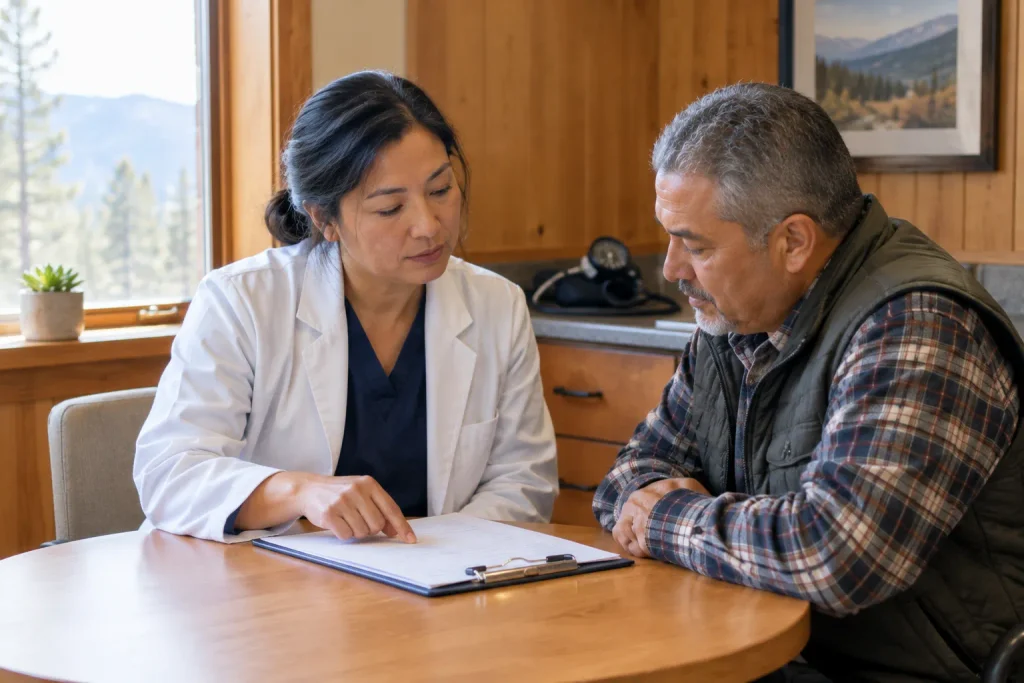
Testing is straightforward, but timing and interpretation matter. Here is what the process typically looks like:
- Start with a symptom review. A provider looks at your full symptom picture, not just one complaint, to decide which hormones need testing alongside DHEA.
- Order a DHEA-S blood test. This measures DHEA-sulfate, the more stable form of the hormone in your bloodstream, and is the standard way to assess your levels.
- Pair it with related hormone testing. Cortisol, estrogen, and testosterone are usually tested at the same time, since DHEA converts into these and rarely tells the full story on its own.
- Review results against symptoms, not just reference ranges. A result inside the “normal” range can still be low for your age, sex, and symptom pattern, which is why context matters as much as the number itself.
- Build a plan from the findings. If DHEA or related hormones are low, treatment options range from lifestyle and stress support to bioidentical hormone therapy, depending on what your labs and symptoms actually show.
If you are already dealing with fatigue, mood changes, or low libido and have not had DHEA specifically tested, that is usually the first gap worth closing.
Why Evexia
Evexia is built around the idea that symptoms like fatigue, low mood, and low libido deserve a real answer, not a shrug and a suggestion to sleep more. Founder and Lead Clinical Director Deanna McNulty, DNP, FNP-C, brings more than 26 years in medicine to every case, and that experience shapes how testing and treatment decisions get made here.
Rather than treating DHEA, estrogen, or testosterone as isolated numbers, Evexia’s bioidentical HRT program matches hormone therapy to your actual labs and symptoms, not a generic protocol. For patients whose fatigue and mood symptoms point to a deeper pattern involving stress, gut health, or inflammation, that work often connects to Evexia’s broader conditions we treat, including hormonal health and energy and fatigue.
As a cash-pay clinic based in Florissant, Colorado, Evexia offers both telehealth and in-person care, so testing and follow-up can fit around your schedule rather than the other way around. That flexibility matters for hormone care specifically, since getting an accurate picture often means retesting or adjusting a plan as your body responds, not a single visit and a single prescription.
Frequently Asked Questions
What does DHEA do for the body?
DHEA acts as a building block your body converts into estrogen and testosterone. It supports energy, mood stability, libido, muscle maintenance, and immune function, which is why low levels can affect several systems at once rather than causing one isolated symptom.
What are the signs of low DHEA?
Common signs include persistent fatigue, low mood or motivation, reduced libido, slower recovery from exercise or illness, and difficulty handling stress. These symptoms often overlap with normal aging, so they are frequently missed unless DHEA is specifically tested.
How is DHEA tested?
DHEA is measured with a blood test called DHEA-S, which checks the more stable sulfate form of the hormone. It is typically ordered alongside cortisol, estrogen, and testosterone testing for a fuller picture of your hormonal health.
At what age does DHEA start declining?
DHEA generally peaks in your mid-20s and declines steadily afterward. By your 70s or 80s, levels can be 80 to 85 percent lower than their peak, though chronic stress and certain health conditions can accelerate the decline earlier.
Can low DHEA be treated?
Yes. Depending on your labs and symptoms, treatment can include lifestyle and stress management support or bioidentical hormone therapy designed around your specific results, rather than a standard dose applied to every patient.
Ready to find out what is behind your fatigue, mood, or libido changes?
Testing is the only way to know whether DHEA, another hormone, or a deeper root cause is driving your symptoms. See If You Qualify for a hormone evaluation at Evexia and get answers based on your own labs, not guesswork.