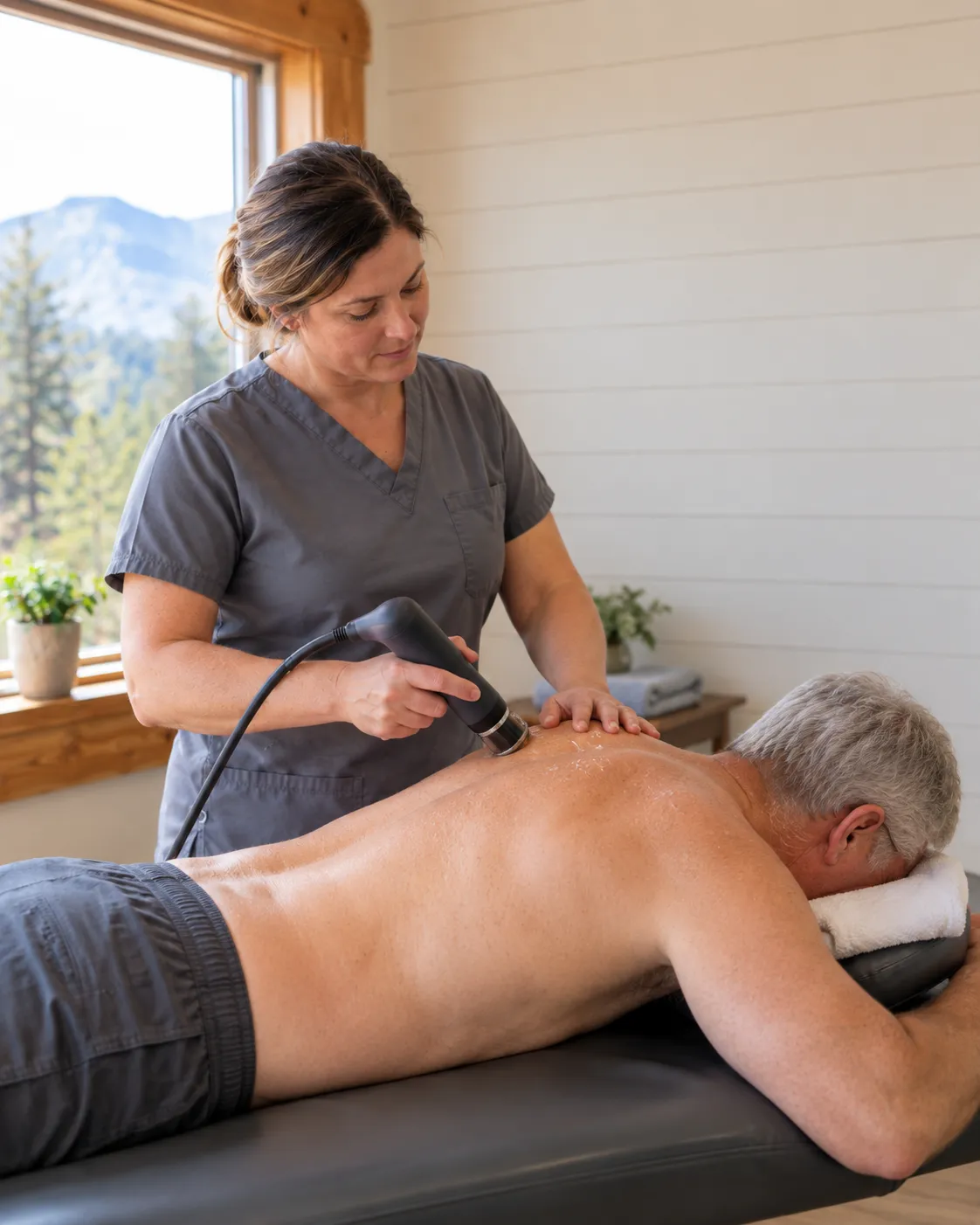
Shockwave therapy for knee pain uses focused acoustic wave energy to stimulate blood flow and cellular repair in damaged knee tissue. Most clients complete a short series of sessions, each lasting about 15 to 20 minutes, with many noticing improved mobility within a few weeks. At Evexia, Stem Wave sessions are available in Florissant, Colorado …
Shockwave therapy for knee pain uses focused acoustic wave energy to stimulate blood flow and cellular repair in damaged knee tissue. Most clients complete a short series of sessions, each lasting about 15 to 20 minutes, with many noticing improved mobility within a few weeks. At Evexia, Stem Wave sessions are available in Florissant, Colorado through a personalized plan built around your specific knee condition.
Knee pain can turn ordinary movement into a daily struggle, whether it comes from years of wear, an old sports injury, or simple overuse. If you have been told that surgery or long-term medication is your only option, there is another path worth understanding. Shockwave therapy for knee pain offers a non-invasive way to reduce discomfort and support the body’s own healing process. At Evexia, this approach is part of the Stem Wave program, designed to treat the root cause of joint pain rather than simply masking the symptoms.
Understanding Knee Pain and Why It Lingers

Knee pain rarely comes from a single cause. Because the knee joint depends on cartilage, tendons, ligaments, and surrounding muscle to work together, damage in any one area can create pain that spreads and lingers long after the original injury seems to have healed.
Common contributors to chronic knee pain include:
- Osteoarthritis and gradual cartilage breakdown
- Patellar tendinitis from repetitive stress or overuse
- Old ligament or meniscus injuries that never fully healed
- Poor circulation to the joint, which slows natural repair
- Muscle imbalances in the hips and legs that place extra strain on the knee
When these issues go untreated, the body can settle into a cycle of inflammation and reduced blood flow. This is part of why knee pain often becomes chronic instead of resolving on its own with rest alone.
Who Tends to Benefit Most from Shockwave Therapy
Not every case of knee pain responds the same way to treatment, so it helps to understand where shockwave therapy tends to make the biggest difference.
- Clients with mild to moderate osteoarthritis looking for a non-surgical option
- Runners, hikers, and active adults with patellar tendinitis or overuse injuries
- Anyone with lingering pain from an old sport or work-related injury
- Clients who want to avoid the downtime and risk that comes with surgery
- Individuals whose knee pain has plateaued despite rest, ice, or medication
A short consultation is usually enough to determine whether your specific knee condition is a strong candidate for this type of regenerative approach. Bringing any imaging, prior treatment notes, or a clear timeline of when the pain started helps your provider build the most accurate plan from the very first visit.
How StemWave Shockwave Therapy Treats Knee Pain at the Root
Traditional approaches to knee pain often focus on covering up the symptom. Anti-inflammatory medication can reduce swelling temporarily, and surgery may be necessary for severe structural damage, but neither approach addresses why the tissue stopped healing in the first place.
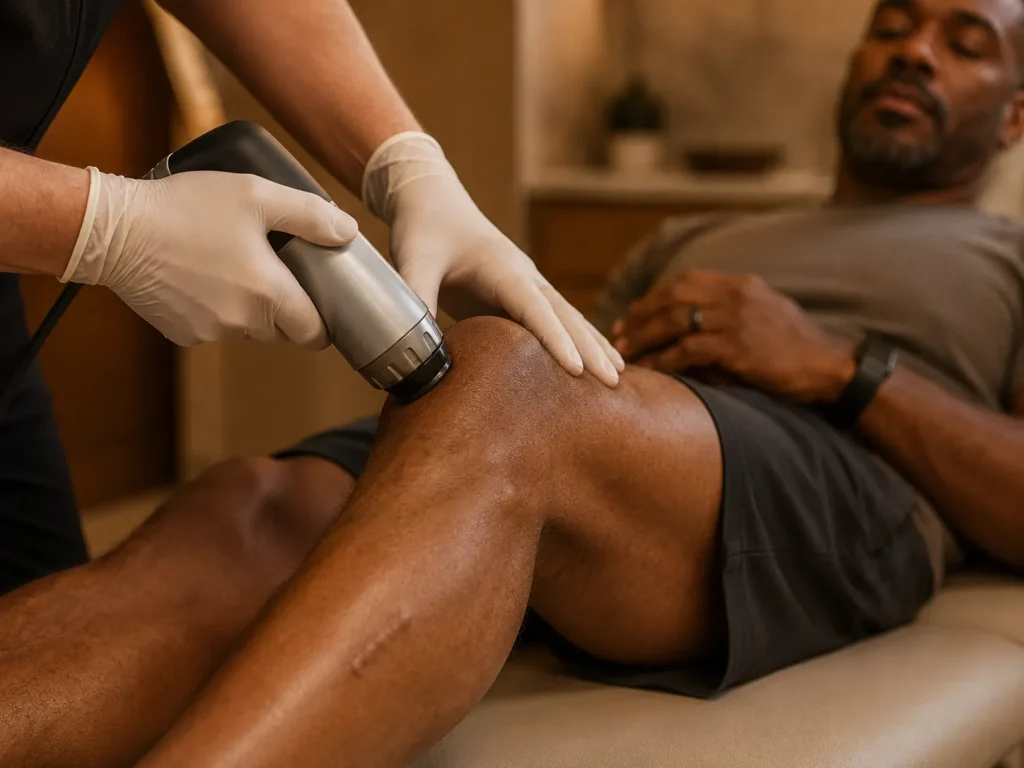
Shockwave therapy works differently. The focused acoustic waves used in StemWave sessions penetrate into the affected tissue and trigger a localized healing response. This includes increased blood flow, the formation of new microvascular pathways, and stimulation of the body’s own regenerative cells.
| Approach | What It Does | Limitation |
| Medication | Reduces pain and inflammation temporarily | Does not repair damaged tissue |
| Surgery | Corrects structural damage directly | Invasive, with an extended recovery time |
| Shockwave Therapy (StemWave) | Stimulates natural tissue repair and blood flow | Requires a series of sessions for full effect |
For many clients dealing with tendinitis, mild to moderate osteoarthritis, or lingering post injury pain, this regenerative approach offers meaningful relief without the downtime associated with surgery. Learn more about how the StemWave program is structured at Evexia.
What to Expect During Shockwave Therapy for Knee Pain

If you are considering shockwave therapy for the first time, knowing what happens during a session can ease any uncertainty.
- Initial assessment: Your provider evaluates your knee pain history, current mobility, and any prior treatment you have tried.
- Treatment planning: A session schedule is built around your specific condition, typically involving multiple visits spaced over several weeks.
- The session itself: A handheld device delivers focused acoustic waves to the targeted area of the knee, with most sessions lasting 15 to 20 minutes.
- Post session activity: Most clients resume normal daily activity right away, though your provider may recommend modifying high impact exercise during the treatment series.
- Progress check ins: Mobility and pain levels are reassessed throughout the series to track improvement and adjust the plan as needed.
Because shockwave therapy is non-surgical and does not require anesthesia or extended downtime, it fits into a normal routine far more easily than surgical alternatives typically allow.
Why Choose Evexia for Shockwave Therapy in Florissant, CO
Evexia is led by Deanna McNulty, DNP, FNP-C, who brings more than 26 years in medicine to every client plan. Rather than treating knee pain as an isolated symptom, Evexia looks at the full picture, including circulation, inflammation, and the cellular health of the joint, to build a plan that supports lasting recovery.
As a cash pay clinic offering both telehealth and in person care from Florissant, Colorado, Evexia removes the friction of insurance approvals and lets your care plan focus entirely on what your knee actually needs. This root cause approach is part of what makes StemWave different from a quick fix aimed only at symptoms. Explore the full list of conditions Evexia treats, including pain, injury, and recovery support, to see how shockwave therapy fits into a broader wellness plan.
If your knee pain developed alongside other joint or muscle issues, it may be worth reading how Evexia approaches shockwave therapy for back pain as well, since many clients experience overlapping joint concerns that benefit from the same root cause evaluation.
Is Shockwave Therapy Safe for Knee Pain
Shockwave therapy has a strong safety profile when performed by a trained provider. Because it is non-invasive and does not involve needles, incisions, or anesthesia, the risks associated with surgery, such as infection or a lengthy recovery, do not apply.
Most clients tolerate treatment well, with only mild and temporary soreness or redness at the treatment site in some cases. Your provider will review your full health history before starting, since certain conditions such as active infections, blood clotting disorders, or pregnancy may make shockwave therapy inappropriate. This is why an initial assessment matters so much before any session begins.
Pairing shockwave therapy with simple daily habits can also support your results. Staying hydrated, keeping the knee gently mobile between sessions, and avoiding high impact activity during the active treatment series all give the tissue the best environment to repair itself.
Frequently Asked Questions
Does shockwave therapy hurt?
Most clients describe shockwave therapy as producing a mild pressure or tapping sensation rather than sharp pain. Discomfort is generally mild and temporary, and most people tolerate the full session without difficulty.
How many sessions are needed for knee pain?
The number of sessions depends on the severity and cause of your knee pain, but many clients complete a series of several sessions spaced over a few weeks. Your provider outlines a personalized schedule during your initial assessment.
Is shockwave therapy a substitute for knee surgery?
Shockwave therapy is not appropriate for every knee condition, but for many cases of tendinitis, mild arthritis, or soft tissue injury, it can meaningfully reduce pain and improve function without surgery. A consultation helps determine whether it fits your specific knee issue.
How soon will I notice results?
Some clients notice improved mobility within a few weeks of starting treatment, though full results typically build over the course of the complete session series as tissue repair continues.
Can shockwave therapy help with knee pain from an old sports injury?
Yes. Shockwave therapy is often used for lingering pain from past injuries because it targets tissue that has stopped healing properly, stimulating a renewed repair response even months or years after the original injury.
If you are curious how this approach compares to other non-surgical options Evexia offers, the post on shockwave therapy for plantar fasciitis walks through a related use of the same technology.
Ready to Move Without Knee Pain?
You do not have to accept ongoing knee pain as a permanent part of life.Book A Session with Evexia to find out whether shockwave therapy is the right non-surgical path to relief for your knee.