
The most common symptoms of hormonal imbalance in women include irregular periods, unexplained weight gain, persistent fatigue, mood swings, and disrupted sleep. These symptoms often trace back to shifts in estrogen, progesterone, testosterone, or thyroid function. Evexia's bioidentical hormone therapy program starts with functional lab testing to find the true root cause before building a …

The most common symptoms of hormonal imbalance in women include irregular periods, unexplained weight gain, persistent fatigue, mood swings, and disrupted sleep. These symptoms often trace back to shifts in estrogen, progesterone, testosterone, or thyroid function. Evexia’s bioidentical hormone therapy program starts with functional lab testing to find the true root cause before building a personalized treatment plan.
Hormonal imbalance in women is often dismissed as normal aging, everyday stress, or just getting older, but persistent symptoms are usually your body’s way of signaling that something deeper needs attention. Estrogen, progesterone, testosterone, thyroid hormones, and cortisol work together as a delicate system. When even one of these hormones shifts out of range, the effects can touch nearly every part of daily life, from sleep and mood to weight and energy levels. Many women spend years moving between specialists before anyone connects their symptoms back to a hormonal root cause. At Evexia, we start by asking why the imbalance is happening in the first place, not just how to cover up the symptoms. Below are ten signs of hormonal imbalance in women you should never brush aside.
What Causes Hormonal Imbalance in Women?

Hormonal imbalance rarely has a single cause. It usually develops from a combination of biological changes, lifestyle factors, and underlying health conditions that build up over time. Common contributors include:
- Perimenopause and menopause, which naturally lower estrogen and progesterone
- Chronic stress, which raises cortisol and disrupts other hormone levels
- Thyroid dysfunction, including hypothyroidism and hyperthyroidism
- Polycystic ovary syndrome (PCOS) and other endocrine conditions
- Poor sleep quality, which interferes with overnight hormone regulation
- Nutrient deficiencies, particularly in vitamin D, magnesium, and B vitamins
- Changes in medication or hormonal birth control
10 Symptoms of Hormonal Imbalance in Women You Shouldn’t Ignore

These are the ten symptoms of hormonal imbalance in women that show up most often among our clients in Florissant, Colorado, and the ones people are most likely to write off as unrelated.
- Irregular or Missed Periods
Cycles that become shorter, longer, heavier, or unpredictable often point to shifting estrogen and progesterone levels rather than a normal variation. A cycle that once ran like clockwork and suddenly does not is one of the earliest and most reliable signals that something hormonal has changed.
- Persistent Fatigue
Feeling tired even after a full night of sleep can signal thyroid dysfunction, low progesterone, or elevated cortisol working against your energy levels. This kind of fatigue tends to be constant rather than tied to a single busy week, and it usually does not improve with more rest alone.
- Unexplained Weight Gain
Weight that gathers around the midsection despite no change in diet or activity is a common sign that hormones, not willpower, are driving the shift. Estrogen and cortisol both influence where the body stores fat, which is why the same habits can produce different results as hormone levels change.
- Mood Swings and Irritability
Estrogen and progesterone directly influence serotonin and dopamine, so sudden shifts in mood, anxiety, or irritability often have a hormonal root. Many women describe feeling like a different version of themselves, which can be confusing when nothing else in their life has changed.
- Sleep Disruption
Trouble falling asleep, waking frequently, or night sweats that interrupt rest are commonly tied to declining progesterone and estrogen. Poor sleep and hormonal imbalance often feed each other, since inadequate rest further disrupts the hormones responsible for regulating it.
- Hot Flashes and Night Sweats
These sudden waves of heat are one of the clearest signals of estrogen decline, particularly during perimenopause and menopause. They can happen at any time of day, but night sweats in particular tend to be the symptom that finally prompts women to seek testing.
- Low Libido
A drop in sex drive is frequently connected to low testosterone or estrogen, not only stress or relationship factors. Because testosterone plays a role in women’s health too, this symptom is often overlooked or attributed to unrelated causes.
- Brain Fog and Memory Lapses
Difficulty concentrating or forgetting simple things can stem from fluctuating estrogen, which plays a direct role in cognitive function. This symptom is often dismissed as stress or normal aging, but it frequently improves once hormone levels are addressed.
- Hair Thinning or Skin Changes
Thinning hair, dry skin, or new adult acne can point to imbalances in thyroid hormones, testosterone, or estrogen. These changes tend to develop gradually, so they are easy to attribute to age or products rather than hormone shifts.
- Joint Pain and Muscle Aches
Estrogen helps regulate inflammation, so declining levels can show up as new or worsening joint and muscle discomfort. Women sometimes describe this as feeling stiff or achy in a way that does not match their activity level.
Symptom to Root Cause Table
Here is a quick reference for how common symptoms connect back to a root cause, and how Evexia approaches each one.
| Symptom | Possible Root Cause | How Evexia Addresses It |
| Irregular periods | Shifting estrogen/progesterone, perimenopause | Comprehensive hormone panel and personalized bioidentical HRT |
| Persistent fatigue | Thyroid dysfunction, low progesterone, high cortisol | Functional lab testing to pinpoint the source, not just symptom masking |
| Unexplained weight gain | Hormonal shifts affecting metabolism | Root cause testing paired with hormone balancing, not a generic diet plan |
| Mood swings | Estrogen and progesterone fluctuation | Bioidentical hormone therapy matched to your labs and symptoms |
| Sleep disruption | Declining progesterone and estrogen | Targeted hormone support built on a full root cause evaluation |
How Evexia’s Root Cause Approach to Hormone Health Works
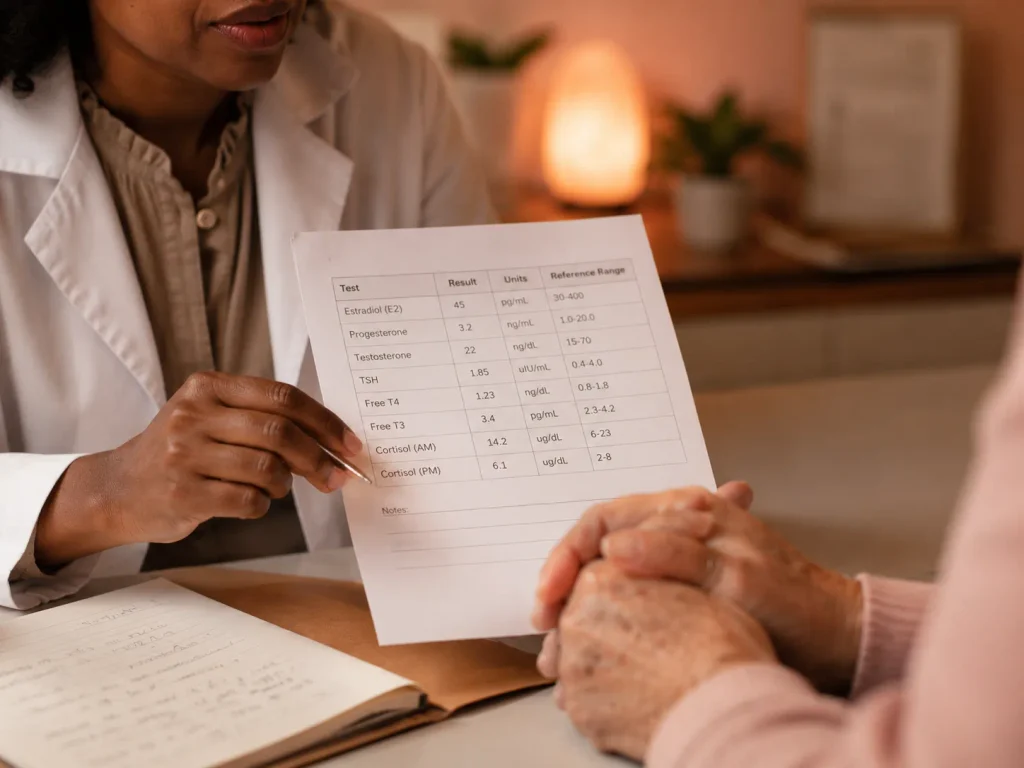
Rather than reaching for a standard dose or a generic prescription, Evexia builds every hormone plan around your own labs, symptoms, and history.
- Comprehensive Lab Testing
We start with functional hormone testing that goes beyond a standard panel, evaluating estrogen, progesterone, testosterone, thyroid, and cortisol together.
- Personalized Treatment Plan
Your results and symptoms shape a plan built around your body, not a one size fits all protocol.
- Bioidentical Hormone Therapy
We use bioidentical hormones matched to your labs, with the goal of restoring balance rather than simply masking symptoms.
- Ongoing Monitoring
We recheck labs and adjust your plan as your body responds, so treatment evolves with you over time.
When to Talk to a Provider About These Symptoms
If you are experiencing two or more of the symptoms above, especially if they have lasted more than a few months or are affecting your daily life, it is worth having your hormone levels evaluated. Waiting rarely resolves a true hormonal imbalance on its own, and identifying the root cause early gives you a better chance of feeling like yourself again sooner.
Why Choose Evexia
Evexia is led by Deanna McNulty, DNP, FNP-C, a nurse practitioner with more than 26 years in medicine who built her practice around one core idea: treat the cause, not just the symptom. Based in Florissant, Colorado, Evexia offers cash-pay hormonal health care through both telehealth and in-person visits, so you are never limited to a single insurance-approved protocol. Every hormone plan starts with real lab data, not assumptions.
Frequently Asked Questions
What are the most common symptoms of hormonal imbalance in women?
The most common symptoms include irregular periods, fatigue, weight gain, mood swings, and sleep disruption. These often trace back to shifts in estrogen, progesterone, testosterone, or thyroid hormones, and testing is the only way to confirm which hormone is out of range.
At what age do women typically start noticing hormonal imbalance symptoms?
Symptoms can appear as early as the mid-30s during perimenopause, though PCOS, thyroid conditions, and chronic stress can trigger imbalance symptoms at any adult age. Age alone does not determine when symptoms start.
Can hormonal imbalance be reversed naturally?
Lifestyle changes like better sleep, stress management, and nutrition can support hormone health, but they do not always resolve a true imbalance on their own. Functional testing helps determine whether medical support, like bioidentical HRT, is needed alongside those changes.
How is hormonal imbalance diagnosed?
Hormonal imbalance is diagnosed through comprehensive lab testing that measures estrogen, progesterone, testosterone, thyroid hormones, and cortisol together, rather than looking at a single hormone in isolation.
What is bioidentical hormone replacement therapy?
Bioidentical hormone therapy uses hormones that are structurally identical to the ones your body naturally produces, matched to your individual labs and symptoms rather than a standardized dose.
Is hormonal imbalance the same thing as menopause?
Menopause is one common cause of hormonal imbalance, but it is not the only one. Younger women can experience the same core symptoms due to PCOS, thyroid disorders, chronic stress, or postpartum hormone shifts, which is why testing matters at any age.
Ready to Feel Like Yourself Again
If these symptoms sound familiar, your hormones may be trying to tell you something. Explore Evexia’s bioidentical HRT program to see how a root cause approach differs from a standard prescription, then See If You Qualify and take the first step toward lasting hormone balance.