
Shockwave therapy uses focused acoustic waves to stimulate blood flow and cellular repair in damaged plantar fascia tissue, and clinical research shows it can meaningfully reduce heel pain and improve function over several weeks. Most clients complete a short series of in-office sessions, and Evexia offers this treatment through StemWave, our non-surgical cellular regeneration therapy.If …
Shockwave therapy uses focused acoustic waves to stimulate blood flow and cellular repair in damaged plantar fascia tissue, and clinical research shows it can meaningfully reduce heel pain and improve function over several weeks. Most clients complete a short series of in-office sessions, and Evexia offers this treatment through StemWave, our non-surgical cellular regeneration therapy.
If you have ever taken your first steps in the morning and felt a sharp stab through your heel, you already know how disruptive plantar fasciitis can be. Shockwave therapy for plantar fasciitis has become one of the most researched non-surgical options for this kind of heel pain, and for good reason. Instead of simply masking discomfort with rest, ice, or medication, shockwave therapy works by stimulating your body’s own healing response at the site of the damaged tissue.
At Evexia, we use StemWave, a form of focused acoustic wave therapy, to help clients address the root cause of their heel pain rather than manage the same symptoms month after month. Below, we break down how this treatment actually works, what the research shows, and what a typical course of care looks like, so you can make an informed decision about whether it is the right next step for your recovery.
Heel pain has a way of quietly reshaping your daily routine. You might start avoiding stairs, cutting workouts short, or favoring one side of your body without even realizing it. Over time, those small adjustments can create new strain elsewhere, from your knees to your lower back. Understanding what is actually happening inside the plantar fascia, and what treatment options are backed by real research, is the first step toward breaking that cycle instead of just managing around it.
Understanding Plantar Fasciitis

Plantar fasciitis develops when the thick band of tissue connecting your heel bone to your toes, called the plantar fascia, becomes irritated and inflamed from repeated strain. This is not just a symptom of overuse. It is often a sign that the tissue’s normal healing cycle has been disrupted somewhere along the way, whether that is from footwear, activity level, gait mechanics, or an underlying inflammatory pattern.
Common signs of plantar fasciitis include:
- Sharp, stabbing heel pain, especially with your first steps in the morning
- Pain that eases as you move but returns after long periods of standing or sitting
- Tightness or stiffness along the arch of the foot
- Mild swelling near the heel
- Pain that tends to worsen after exercise rather than during it
Plantar fasciitis is also more common than many people realize, particularly among runners, people who stand for long shifts at work, and those managing extra weight through the feet. Left unaddressed, chronic strain on the plantar fascia can lead to compensatory pain in the knees, hips, or lower back, since your body naturally shifts how it moves to avoid the discomfort. This is one of the reasons an accurate evaluation matters before starting any treatment plan, including shockwave therapy.
How StemWave Shockwave Therapy Works
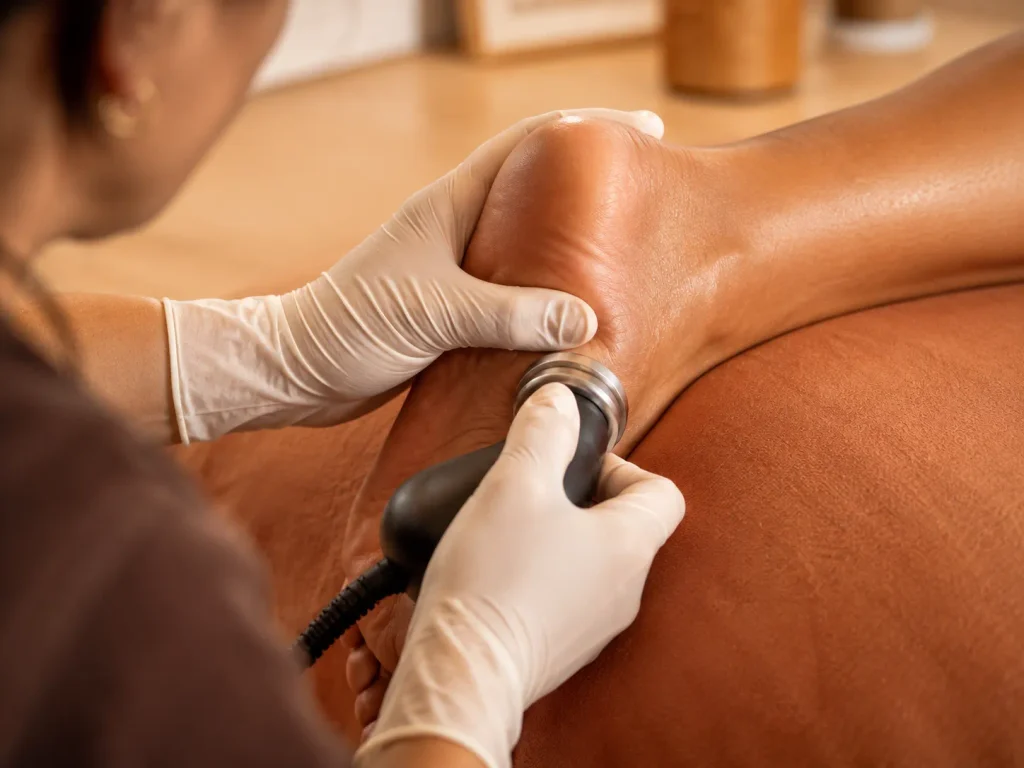
StemWave delivers focused acoustic waves through the skin directly to the affected area of the plantar fascia. These pulses create controlled microtrauma at the cellular level, which signals your body to increase blood flow, recruit growth factors, and rebuild healthier tissue. Rather than simply quieting pain signals, this approach works with your body’s own regenerative processes to address the tissue damage itself.
Because StemWave targets the tissue rather than just calming nerve signals, many clients notice that results build gradually over the course of treatment instead of disappearing the moment a session ends. You can learn more about how this pillar of care fits into a broader wellness plan on our StemWave therapy page.
Unlike passive treatments that simply reduce discomfort while you wait for tissue to heal on its own, StemWave is designed to actively encourage that healing process. Sessions are performed in-office, do not require incisions or downtime, and are typically well tolerated by clients who have not found relief through rest or stretching alone.
What Does the Research Say?

Shockwave therapy has been studied for plantar fasciitis and other soft tissue conditions for years, and the research base is one reason it has become a standard non-surgical option in many sports medicine and orthopedic settings.
| What Research Looks At | What It Generally Shows |
| Pain reduction | Multiple studies associate shockwave therapy with meaningful reductions in heel pain scores compared with placebo treatment. |
| Treatment timeline | Improvement is typically gradual, with many clients reporting noticeable change within three to six weeks of starting sessions. |
| Invasiveness | Sessions are non-surgical and performed in-office, so most clients return to normal daily activity the same day. |
| Best-suited clients | Those with chronic plantar fasciitis that has not fully responded to rest, stretching, or orthotics alone tend to see the most benefit. |
As with any treatment, individual results vary based on how long you have had symptoms, your overall health, and how closely you follow your provider’s plan between sessions. Evexia never promises a guaranteed outcome, but the research supporting shockwave therapy is part of why we offer it as a core option for heel pain. It is also why shockwave therapy is increasingly considered before more invasive options are explored, since it carries a favorable safety profile alongside its evidence base.
What to Expect: The StemWave Process at Evexia
A typical course of shockwave therapy for plantar fasciitis at Evexia follows a clear sequence:
- An initial evaluation, where your provider reviews your history and confirms plantar fasciitis is the right explanation for your pain.
- A personalized session plan based on how long you have had symptoms and how severe they are.
- In-office StemWave sessions, which are typically brief and performed without anesthesia.
- Guidance on movement, footwear, and load management between sessions to support healing.
- Reassessment along the way to track progress and adjust your plan as needed.
Why Evexia
At Evexia, shockwave therapy for plantar fasciitis is never treated as a stand-alone fix. Founder and Lead Clinical Director Deanna McNulty, DNP, FNP-C, brings more than 26 years in medicine to every treatment plan, with a consistent focus on identifying why the tissue broke down in the first place. That might mean looking at gait mechanics, inflammation patterns, or recovery habits that are keeping the plantar fascia from healing on its own.
This root cause approach is part of what sets StemWave at Evexia apart from a generic pain relief visit. Rather than treating your heel in isolation, your provider considers how this pain connects to the rest of your health, so your plan supports lasting recovery instead of a short term fix. To see how shockwave therapy fits alongside our other pillars of care, visit our conditions we treat overview.
Local clients also value having this kind of care close to home, delivered by a provider who knows their history rather than a rotating cast of specialists. That continuity matters most with a condition like plantar fasciitis, where progress depends on consistent follow up and small adjustments along the way.
Frequently Asked Questions
How many shockwave therapy sessions will I need for plantar fasciitis?
Most clients complete a series of sessions scheduled roughly a week apart, though the exact number depends on how long you have had symptoms and how your tissue responds. Your provider at Evexia builds a personalized plan after your initial evaluation rather than using a one-size-fits-all schedule.
Is shockwave therapy painful?
Sessions can feel like a pulsing or tapping sensation, and some clients notice mild soreness for a day or two afterward. Most people tolerate StemWave sessions well and do not need anesthesia or downtime to recover.
How soon will I notice results?
Some clients feel gradual improvement within a few weeks, though healing timelines vary based on the severity and duration of the plantar fasciitis. Because StemWave supports your body’s own repair process, results tend to build over time rather than appear instantly.
Can shockwave therapy help if I have already tried orthotics or stretching?
Yes. Many clients turn to shockwave therapy specifically because rest, stretching, or orthotics alone did not fully resolve their heel pain. StemWave targets the tissue itself, which can complement the mechanical support those other approaches provide.
Is shockwave therapy a substitute for seeing a provider about my heel pain?
No. Shockwave therapy works best as part of a personalized care plan built after a proper evaluation. Evexia’s team confirms your diagnosis first, since heel pain can have several different underlying causes.
Will I need to change my activity level during treatment?
Many clients continue most of their normal routine during a course of shockwave therapy, though your provider may suggest short term adjustments to high impact activity while your tissue heals. These recommendations are individualized based on your symptoms and how you respond to early sessions.
Ready to Get to the Root of Your Heel Pain
You do not have to keep working around heel pain that limits your mornings, your workouts, or your time on your feet. Evexia’s team can evaluate whether shockwave therapy is the right fit for your plantar fasciitis and build a plan around your specific history. Book A Session to get started.