
Quick Answer: GLP-1 medications reduce appetite so effectively that many clients unintentionally cut protein and overall calories too low, which accelerates muscle loss alongside fat loss. Preventing this requires prioritizing protein at every meal, adding two to three resistance training sessions per week, and adjusting the plan as your body changes. Evexia pairs GLP-1 prescribing …

Quick Answer: GLP-1 medications reduce appetite so effectively that many clients unintentionally cut protein and overall calories too low, which accelerates muscle loss alongside fat loss. Preventing this requires prioritizing protein at every meal, adding two to three resistance training sessions per week, and adjusting the plan as your body changes. Evexia pairs GLP-1 prescribing with personalized nutrition and lean mass guidance so your results are sustainable and not just a smaller number on the scale.
Rapid weight loss on a GLP-1 medication does not only remove fat. Without the right nutrition and training plan, a meaningful share of what comes off is lean muscle, and that muscle loss can undermine your metabolism, strength, and long term results. GLP-1 and muscle loss prevention has become one of the most talked about topics in medical weight loss for a simple reason: the scale can drop while your body composition quietly moves in the wrong direction. Understanding why this happens, and what to do about it, is the difference between losing weight and actually improving your health.
Why GLP-1 Weight Loss Puts Muscle at Risk

GLP-1 medications work by slowing digestion and reducing appetite signals in the brain, which is exactly what makes them effective for weight loss. That same appetite suppression is also what creates the muscle loss risk. When you eat less overall, your body pulls energy from wherever it can find it, and without enough protein and muscle stimulus, that includes breaking down muscle tissue alongside fat.
Research on rapid weight loss consistently shows that a portion of total weight lost, often a substantial one, can come from lean mass rather than fat when nutrition and activity are not deliberately structured to protect it. This matters for more than appearance. Muscle drives your resting metabolism, supports joint stability, regulates blood sugar, and protects you from frailty as you age. Losing it faster than intended can leave you lighter on the scale but weaker, more fatigue prone, and more likely to regain fat once the medication phase ends.
A root cause approach treats this as a predictable, manageable side effect rather than an unavoidable one. The goal at Evexia is never just weight loss. It is fat loss with muscle preserved, so your metabolism stays strong long after treatment.
Common contributors to muscle loss on GLP-1 medications:
- Reduced overall appetite leading to insufficient total calorie and protein intake
- Skipping protein at meals because smaller portions feel like “enough”
- Little or no resistance training during the weight loss phase
- Rapid weight loss pace without gradual, monitored adjustments
- Dehydration or low fiber intake compounding fatigue and reduced activity
Eating to Protect Muscle While You Lose Weight

Protein is the single most important nutrition lever for GLP-1 and muscle loss prevention. Because appetite is naturally suppressed, every meal needs to work harder nutritionally. That means prioritizing protein first on the plate, before carbohydrates or fat, so you are not left without room for it once you feel full.
Most adults on a GLP-1 medication benefit from spreading protein across three smaller meals rather than trying to eat it all at once, since appetite may not allow for large portions. Lean sources like eggs, Greek yogurt, cottage cheese, fish, poultry, tofu, and a quality protein shake are easier to tolerate when digestion is slower and portions are smaller.
| Nutrition Factor | Why It Matters on GLP-1 | Practical Target |
| Protein intake | Preserves muscle when calories are reduced | Protein first at every meal or snack |
| Hydration | Appetite suppression can mask thirst cues | Consistent water intake through the day |
| Fiber | Supports digestion as gastric emptying slows | Small, steady servings across meals |
| Meal frequency | Smaller appetite means less room per sitting | Three to four smaller, protein forward meals |
| Micronutrients | Reduced food volume can mean reduced nutrient variety | A varied plate, not just protein alone |
Beyond protein, hydration and fiber both deserve attention, since GLP-1 medications slow gastric emptying and can make it easy to under eat overall without noticing. A root cause conversation with your provider should also review whether your calorie intake has dropped too far below what your body needs to function well, not just to lose weight.
Training That Preserves Lean Mass on GLP-1
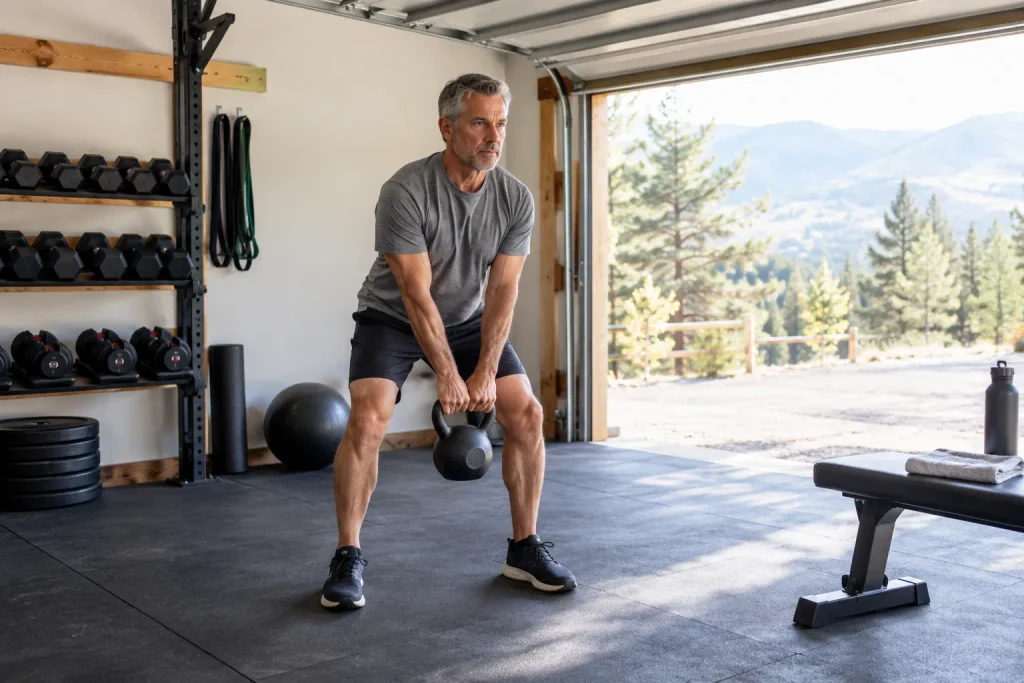
Nutrition alone cannot protect muscle without a reason for your body to keep it. Resistance training gives your body that reason. Cardio has its place for heart health and calorie expenditure, but it is resistance training, not cardio, that signals to your body that muscle is still needed and should not be broken down for fuel.
A practical approach to training while on a GLP-1 medication:
- Start with two to three resistance sessions per week, focused on major muscle groups like legs, back, chest, and shoulders.
- Prioritize compound movements such as squats, rows, presses, and deadlift variations, which recruit more muscle per session than isolated exercises.
- Keep intensity moderate at first if energy is lower than usual, and progress gradually as your body adjusts to the medication.
- Add light daily movement, like walking, to support digestion, mood, and overall energy without adding excessive fatigue.
- Reassess every four to six weeks with your care team, since strength and recovery capacity can shift as weight loss progresses.
Consistency matters more than intensity here. Two well structured sessions per week, done consistently for months, will preserve more muscle than an aggressive plan that gets abandoned after two weeks of soreness and fatigue.
How Evexia Supports Muscle-Preserving GLP-1 Care
Evexia’s approach to GLP-1 treatment is built around the idea that medication is only one part of the picture. Your prescribing plan is paired with nutrition guidance and lean mass strategy, so protein targets, meal timing, and training recommendations are part of your care rather than an afterthought you have to figure out alone.
Labs and progress are monitored throughout treatment, which allows your provider to catch early signs that calorie or protein intake has dropped too low, and to adjust your plan before muscle loss becomes a bigger problem. This is root cause medicine applied to weight loss itself: understanding what your body needs to lose fat while keeping the muscle that keeps you strong, mobile, and metabolically healthy for years after treatment ends.
Why Evexia
Deanna McNulty, DNP, FNP-C, brings more than 26 years in medicine to every GLP-1 plan built at Evexia, with a clinical philosophy centered on treating the cause, not just the symptom. Rather than handing clients a prescription and a generic diet sheet, Evexia’s Florissant, Colorado based team builds an individualized plan around your labs, your goals, and your day to day life, so muscle preserving nutrition and training are part of the conversation from day one. As a cash pay practice offering both telehealth and in person care, Evexia is built for clients across Teller County and beyond who want a provider focused on sustainable results, not just a lower number on the scale.
Frequently Asked Questions
Does everyone lose muscle on GLP-1 medications?
Not necessarily, but the risk is common because appetite suppression often leads to lower protein and calorie intake. Clients who prioritize protein and add resistance training typically preserve significantly more lean mass than those who do not.
How much protein do I need while taking a GLP-1 medication?
Protein needs vary by body size, activity level, and treatment goals, which is why Evexia sets an individualized target rather than a one size fits all number. Spreading protein across smaller meals usually makes it easier to hit that target despite reduced appetite.
Can I lose weight on GLP-1 without exercising at all?
You can lose weight without exercise, but a much larger share of that weight is likely to come from muscle rather than fat. Even light, consistent resistance training meaningfully changes what kind of weight you lose.
Is cardio enough to protect my muscle on GLP-1?
Cardio supports heart health and calorie expenditure, but it does not send the same muscle preserving signal as resistance training. A combination approach, with resistance training as the priority, offers the best protection for lean mass.
How does Evexia monitor muscle loss during GLP-1 treatment?
Evexia tracks progress through regular check ins and lab work throughout your treatment, reviewing how your body is responding beyond just the number on the scale. This allows your provider to adjust nutrition, dosing conversations, and training guidance as your body changes.
Ready to Lose Fat Without Losing Muscle?
GLP-1 and muscle loss prevention starts with a plan built around your body, not a generic protocol. See If You Qualify for Evexia’s medically guided GLP-1 program, paired with the nutrition and training support that protects the muscle you worked to build.